Pages

Search This Blog

Thursday, January 17, 2013

BMW - True Driving Pleasure


When you step into a BMW for the first time and turn the ignition, it is start of whole new perception to the driving experience. Every design that comes out of the Bavarian Motor Works is a high quality and high performance prestige vehicle. If you would like to experience a BMW top performing auto, then you should pay a visit to your BMW dealership to learn more about the models that are available.
The BMW full range is diverse and exhaustive. The starting point is the 1 series, which is an affordable introduction to the very best in German engineering. As an initial foray into the prestige car brand, this is a good choice and you will find out why BMW has garnered such a reputation for providing the best in motoring.
The 3 series BMWs are the biggest selling vehicles in the BMW cache in the United States. The cars in this band are still surprisingly affordable, yet include many of the innovative BMW technological and mechanical features. The exterior of the cars in the range are sleek and stylish and will get you noticed as you zoom about.

2012 Honda CRV Vs 2012 Toyota RAV4


30 years ago, phones had chords, TVs had knobs, and a cup of coffee didn't cost $5.99...a cup. Times were much simpler back then, and so were the cars. Power steering was considered a luxury in 1982. And getting good gas mileage meant that you probably drove a car that was no bigger than Shaq's left shoe.
Fast forward a generation, and 12 year olds can "Tweet" from their "smart" phones, TV's can surf the internet, and Starbucks makes Millions by selling image-conscious yuppies $6 cups of coffee with sprinkles on top. Times have certainly changed, and so too have our cars.
If you wanted a small SUV, with a kid-friendly interior, and room for 7 in 1982, you would've been SOL. But you can get such vehicles today, in every shape & size. Commonly referred to as Crossovers, these little trucklets have a front-wheel car chassis, with an SUV body screwed on top. While most CUVs would get stuck in wet grass, their main purpose is hauling kids & groceries. And to that end, a small CUV is perfect for most young families. The two benchmark, standard-setters in this segment are the 2012 Honda CR-V & 2012 Toyota Rav4. These are the CuteUTE's that other carmakers try to copy, so let's see if we can figure out why.

Technologies That Make Honda's I-VTEC Engine Fuel-Efficient


The all-new Honda City is a beautifully designed car with technical precision and host of innovative technologies. The car has stood tough in competition with the leading sedans in the Indian car market including the Maruti Suzuki SX4.
The winning characteristics of the new Honda City include the advanced i-VTEC engine, the brilliant styling, and a pack of high-end safety features. The intelligent VTEC engine was designed by a team of skilled and talented engineers to meet the growing demand of high fuel-efficiency. In response to the demand, these engineers fine-tuned each and every component of the car engine so that it can generate maximum power and unmatched mileage. With the excellent host of technologies, the VTEC engine boasts about its excellence in all arenas of car industry.
The key reason why the new Honda City has revolution the car market is the powerful and highly efficient i-VTEC engine. Every engine component is tuned to achieve class-leading fuel-efficiency.
Here are some of the technologies that made Honda's i-VTEC engine more fuel-efficient:

Wednesday, January 16, 2013

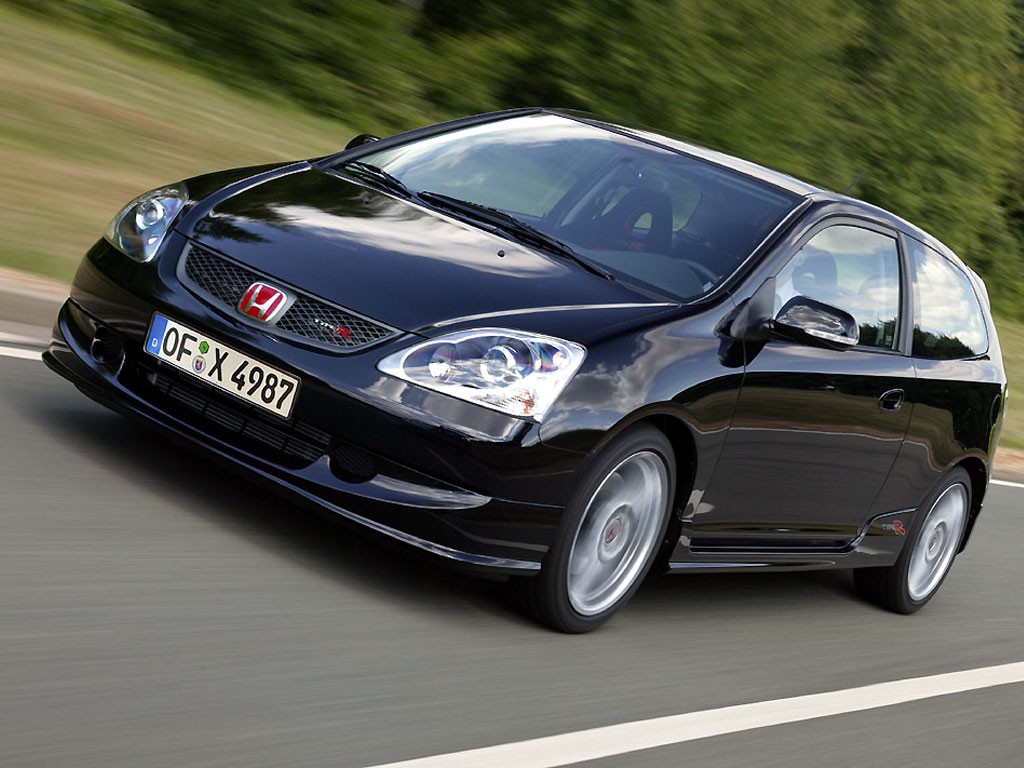
Honda Civic 2.0i VTEC Type R Hatch Review


The Japanese version of the Civic was sold as a 4-door Sedan which generates 222bhp at 8400RPM. This is more powerful than the European version, which generates 198bhp at 7,800RPM. The external features of the 3-Door hatchback have changed some what since 2001, with a slightly less 'sporty' look and more of a 'Honda space age' look. However - under the bonnet the 2litre VTEC engine is the same (tweaked) engine as was in the previous generation, which isn't a bad thing..

Tuesday, January 15, 2013

How and When to Change Engine Oil


Engine oil changes are activities that any driver must not neglect. This is because changing the oil increases the efficiency and lifespan of the engine more than any other maintenance activity. That being said, there are a few things that you have to take into account in order to know when to change the oil.
When changing the oil, you have to read the manufacturer's directions because each type of car is different. These instructions will also guide you in oil selection. You'll also find minor differences in procedure that accommodate varying uses, driving conditions and the like.
The most common instructions to follow when changing the oil is under normal driving conditions i.e. short trips, regular highway trips, occasional drives in dusty roads etc. All in all, you find that the normal duration you should change the oil in is between 3000 to 5000 miles. Sticking to a schedule is better than having to wait for signs like smoke because you do not have to unduly tax your engine.


The following is the general procedure that any driver should follow when changing the oil:
1. Start the engine and let it run for a few minutes. This is very important because the oil and impurities contained therein flow out more easily when they are warm. You may also need to park the car in an elevated place e.g. a ramp if the ground clearance is too low.
2. Look for and unscrew the engine oil fill cap since is the means by which the dirty oil will flow out. It goes without saying that you should have a bucket or drain pan placed underneath to avoid a mess. It also helps to have safety equipment like latex gloves, goggles, closed leather shoes etc. to avoid stains and injuries.
3. The next step cited in procedures of when to change oil is the installation and tightening of the oil drain plug with a new gasket in accordance to the manufacturer's directions. You should then place the bucket or drain pan under the oil filter. Remove the filter, plus the gasket and wipe them down with a clean, absorbent cloth.
4. The next step is manual installation of the new oil filter gasket. You should first apply a thin film of new oil in the opening and screw it tightly on. After this is done, add the new oil into the tank, making sure that you follow the car manufacturer's specifications on oil type, level, etc. This will allow you to prevent unnecessary wastages, when changing the oil.
5. At this stage in the directions of when to change oil, check the oil level using the change engine oil dipstick. The level should be a little ways above the full mark so as to accommodate the oil that will go into the filter.
6. The final step is screwing on the oil fill cap, starting the engine and letting it run for a few moments. This is to allow the new engine oil to circulate into all parts of the engine.
In a nutshell, changing the oil tends to be a very easy and necessary procedure that a driver should never neglect.


Article Source: http://EzineArticles.com/7186850


By 

Auto Repair for Check Engine Lights


If the check engine light comes on in your vehicle that is a clear sign that you need auto repair. This is one of the most important indicators of the health of the engine and working components of the vehicle. Ignoring it could put your vehicle at risk for a wide range of problems. The key thing to remember is that this indicator is important to service as soon as possible. Find out what why the car's computer sensed a problem and then get it fixed to ensure you can maintain the car long-term.
Why Does It Come On?
When you get auto repair, you will quickly learn why the vehicle's light came on. Most often, the technician can plug the car into a computer and run a diagnostic scan on it to determine what the problem is. This can help to provide a wealth of information about the function of your vehicle. In general, numerous things can trigger the light to come on. There is no way to really know what it is until you have this type of scan done to uncover the problems.

Some of the most common reasons for the engine light coming on include the following. Keep in mind that this is only a small number of the potential concerns you should have.
• The engine has gotten wet and this is causing it not to function properly.
• The head gasket is blown, which is often evident from smoke as well.
• An oxygen sensor located within the system is not working or is faulty, which could mean a problem or may not.
• The spark plugs or the wires connecting them are worn out or not working properly.
• The fuel injector o-rings are deteriorating or they are pinched and need replacement.
• The exhaust gas recirculation valves are sticky and not functioning, as they should.
• There are hoses or manifolds that are cracked or loose and need attention.
In these situations, dealing with the underlying problem and resetting the system is all it will take. However, if you are dealing with a bigger problem, such as the vehicle smoking significantly or the engine running loud, this could indicate a more significant failure. Stop using the vehicle right away and get it into a technician as soon as possible.
Auto repair technicians can help you to determine what the cause of that check engine light


Article Source: http://EzineArticles.com/7219866


By 

Saturday, January 12, 2013

Honda Jazz Might Be Expensive But Cheap to Run


The Honda Jazz is a choice of many UK drivers and is famous for its reliability. Honda has managed to sell about quarter of a million units in the UK alone since it was introduced in 2002. It's brilliant design and flexibility distinguishes the Jazz in its class. A new more efficient Hybrid version of the Jazz has also been launched with the same drive train as of the Honda Insight. The only limitation in its wider appeal is that there is no choice of a diesel engine. The Jazz is overall a bit expensive to buy.

Though the previous version of Jazz had a very big cabin but the shape gave a boxy look. The new Jazz comes with even enormous interior, but it does not have a bulky look due to a very smartly designed bodywork. The entry level Jazz doesn't come with alloys and body coloured side mirror. A bespoke grille and blue headlights are offered on the hybrid version. Inside the cabin, the controls for stereo and heater are very easy to reach for the driver on the driver oriented dash board. The plastics used are hard and shiny giving a cheap feel.
The driving position is quite high allowing an excellent all-round view. The gear shift and steering are very light. All these features make the Honda Jazz a very easy to drive car. The Honda engines offered with Jazz are 89bhp 1.2 litre and a 98bhp 1.4-litre petrols. Both of the engines have to be pushed to get a decent performance. The hybrid performs better as extra torque is provided by the electric motor at high revs. The firm suspension is not that good on rough road surfaces and the automatic CVT gear box, wind and road make it a bit noisy inside the cabin.
Jazz enjoys a five star Euro NCAP rating. In this year's Driver Power survey it has scored 100 % for reliability. All the versions come with six airbags and ISOFIX mounting points as standard and Electronic Stability Control comes with all variants apart from the entry level S version. The Jazz has a very spacious and intelligently designed interior which can accommodate a huge variety of loads. The boot offers 399 litres of space which is more than many family hatchbacks. It also features double layered floor to store lose bits and pieces. The rear seats can be completely flattened by a button and bases can be flipped if required. The Jazz outruns most of its rivals for space except Toyota Verso and Nissan Note.

Both of the engines can return more than 50mpg with carbon emissions between 120 and 130g/km if there is not any load on the car. The figures are good but are behind the class, however if there was a diesel option available it would have been a different story. The hybrid gives an economy of 63mpg with 104 g/km of CO2 emissions, just above the 100g/km bar that could have qualified it for the road tax exemption. Still the first year road tax is free and £10 thereafter. The insurance and servicing is not that expensive either, therefore the running costs are very low, making up for the high buying price.
Article Source: http://EzineArticles.com/7346472